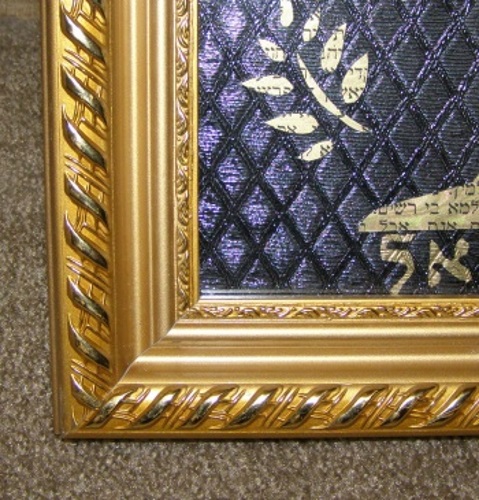
7 Branch Temple Menorah Framed Art
Decorative Gift or Keepsake


Black diamond design background upon golden sheen parchment of ancient Hebrew text (copied from the Hebrew text of the Zohar). Menorah is framed in a gorgeous gold-tone look embossed frame.
- framed size: 8 x 10
- self standing or wall hanging
- handmade
HebArt-BK1 - $34.99
About the Temple Menorah:
The seven branch Menorah, candelabrum, used in the portable Mishkan (sanctuary; tabernacle) set up by Moshe in the wilderness as well as in the Yerushalayim (Jerusalem) Temple, consisted of a base and a shaft with six branches, beaten out of solid gold. The six branches curved to the height of the central shaft, so that all the seven lamps, symbolizing the ideal of universal enlightenment, were in a straight line. They were provided daily with fresh olive oil of the purest quality, and they burned from evening to morning (Shemot / Ex. 27:21). According to Tradition, only the center lamp was left burning all day; it was called Ner haMa'aravi (Western Lamp) because it was next to the branches on the east side (Rashi, Shabbat 22b). The Western Lamp is also referred to as Ner Elokim (the Lamp of G-d), mentioned in Shmuel Alef / 1 Sam. 3:3, which is represented in the synagogue by the Ner Tamid, the perpetual lamp burning before the ark.
The Menorah also symbolizes the creation of the universe in seven days, the center light representing the Shabbat. The seven branches are also said to allude to the continents of the earth as well as the seven heavens, guided by the light of G-d. Frequently used as a symbol of Judaism and the Jewish people, a representation of the seven-branched candlestick has been found on tombs and monuments dating from the first century..